In Japan’s highly competitive cloud service market, “Automated Ops: Solving Cloud Server and CI/CD Integration Issues to Accelerate Deployment Processes” has become an essential approach to improving delivery efficiency. This article provides actionable integration strategies tailored to the compliance and operational realities of the Japanese environment, helping teams shorten the cycle from submission to launch while ensuring stability and security.
The Japanese market has high requirements for service stability and compliance, and automated operations must take into account local laws, data sovereignty, and high availability. By integrating second-instance cloud servers into the CI/CD process, teams can achieve rapid and flexible scaling, reduce human errors, meet local audit and log retention requirements, and improve operational efficiency and user experience.
The key to successful integration lies in the principles of repeatability, traceability, and least privilege. When building automated pipelines, it is essential to ensure that the environment is treated as code, build artifacts are traceable, and credentials and permissions are allocated with minimalism, thereby enabling rapid orchestration and secure deployment of cloud servers within Japan’s compliance framework.
It is recommended to carry out the implementation process in stages: Code management and branching strategies, building and unit testing, image building and security scanning, CI pipeline triggering, CD deployment and verification. Each step should generate auditable logs and artifacts to ensure that in case of failures, it is possible to quickly trace back and restore to a stable version.
In Japan's cloud environment, containerization and Infrastructure as Code (IaC) are given priority. Standardizing container images, fixing network and storage policies, and using templated cloud resource configurations enable rapid scaling of cloud servers in seconds while maintaining environmental consistency, thereby reducing the risks associated with environment drift.
The CI phase should include code static analysis, dependency management, automated unit and integration testing, as well as image building and signing embedded in the pipeline. The Japanese market places a strong emphasis on auditing. It is recommended to store test reports together with the built products, to facilitate compliance reviews and issue tracking, thereby improving quality control before deployment.
The CD phase uses blue-green or rolling updates to ensure zero-downtime deployment. Leveraging the elasticity of SecSolution CVM, you can first test the traffic on a small number of nodes before gradually switching to the main traffic flow. Health checks and automatic rollback strategies should also be configured to prevent anomalies from affecting production availability.
During integration, special attention should be paid to data sovereignty, log retention, access control, and encryption policies. When integrating with third-party services, evaluate the supplier’s compliance status in Japan, establish key management and audit mechanisms, to ensure that security incidents can be quickly identified and regulatory requirements can be met.
A complete monitoring system includes a triad of metrics, logs, and tracing. By combining automated alerts with strategic rollbacks, second-level processing can be triggered in case of anomalies. Operations self-healing can combine scripted repairs with automatic scaling to reduce manual intervention and speed up service recovery.
Implementing automated operations and CI/CD integration is not only a technical transformation but also requires organizational change. The Japanese team can establish a continuous improvement mechanism by clarifying responsibilities, setting up SLAs and SLOs, conducting regular drills, and sharing knowledge, to ensure that the deployment process achieves the best balance between speed and stability.
Common risks during integration include configuration leakage, unavailable rollback, and incompatible dependencies. Measures such as secret management, blue-green deployment and phased rollout, and automated dependency scanning can effectively mitigate this. Developing an accident drill procedure in advance can reduce recovery time in the event of an anomaly.
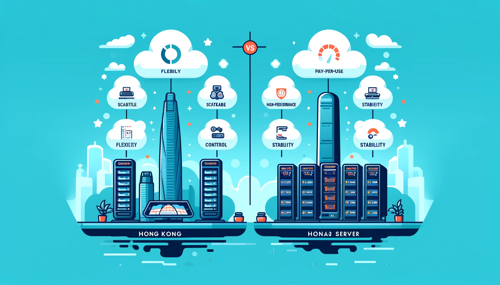
To implement “Automated Ops: Accelerating the Deployment Process by Integrating Cloud Servers and CI/CD in Japan,” technical, compliance, and organizational efforts must be advanced simultaneously. It is recommended to implement it in stages, with short bursts of fast running: First, standardize construction and testing, then introduce containerization and automated deployment, and finally refine monitoring and rollback strategies to achieve accelerated deployment in a stable and efficient manner.
- Latest articles
- Practical Tips For Optimizing The Performance Of VPS Dedicated Line Singapore In A Multinational Office Scenario
- Evaluate The Access Performance Of Domestic Cn2 Taiwan From The Perspective Of SEO And GEO Optimization And Propose Improvements
- A Must-read For Corporate Decision-makers: How Much Does A Korean Cloud Server Cost? Suggestions On Weighing Against Service Quality Assurance
- Hong Kong Cn2 Lightweight Deployment Process Guide From Purchase To Online
- Enterprise Buying Guide Why Renting A German Server Dedicated Line Is More Reliable Than An Ordinary Line
- Hong Kong Cloud Server CDN Deployment Process And Cost Optimization Practical Guide
- Why Hong Kong Vps Has Natural Advantages In Network Connectivity And Bandwidth Stability
- Achieve Independent Traffic Isolation For Different Business Lines Through Multiple IP Addresses Of US High-defense Servers
- Reliability Evaluation Report Of Vietnam Cn2 Service Provider In Enterprise-level Application Deployment
- A Must-read For Enterprise Users: Which Cloud Servers Are Good In Malaysia And Compared With Service Providers?
- Popular tags
-
Reasons To Choose Japanese Vps Hosting, Advantages You Can’t Miss
this article introduces the reasons for choosing japanese vps hosting, analyzes its advantages in terms of performance, security and user support, and helps users make a wise choice. -

How Much Does It Cost To Rent A Japanese Cloud Server? The Latest Market Price And Detailed Explanation Of Bandwidth Storage Packages
this article explains in detail the factors that influence how much it costs to rent a japanese cloud server, analyzes bandwidth and storage packages, billing models and compliance points, provides practical selection and purchasing suggestions, and helps companies rationally judge and control costs. -

Common Customer Questions And Strategies For Promoting Japanese Cloud Servers
To address common customer questions when promoting Japanese cloud servers, we provide standardized strategies and marketing scripts covering performance, compliance, network, billing, deployment, backup, and support, helping sales and content teams improve conversion and GEO search results.